For mothers, fathers and everyone who cares for children
Pediatric retina · Retinoblastoma
Retinoblastoma: early detection starts at home.
It is the most common eye cancer in childhood, and it mostly affects children under five 3. Found early, the great majority of children are cured. I explain the two signs you can see at home, and what to do today if you see them.
You know your child better than anyone. If something about their eyes catches your attention, trust that and get it checked.
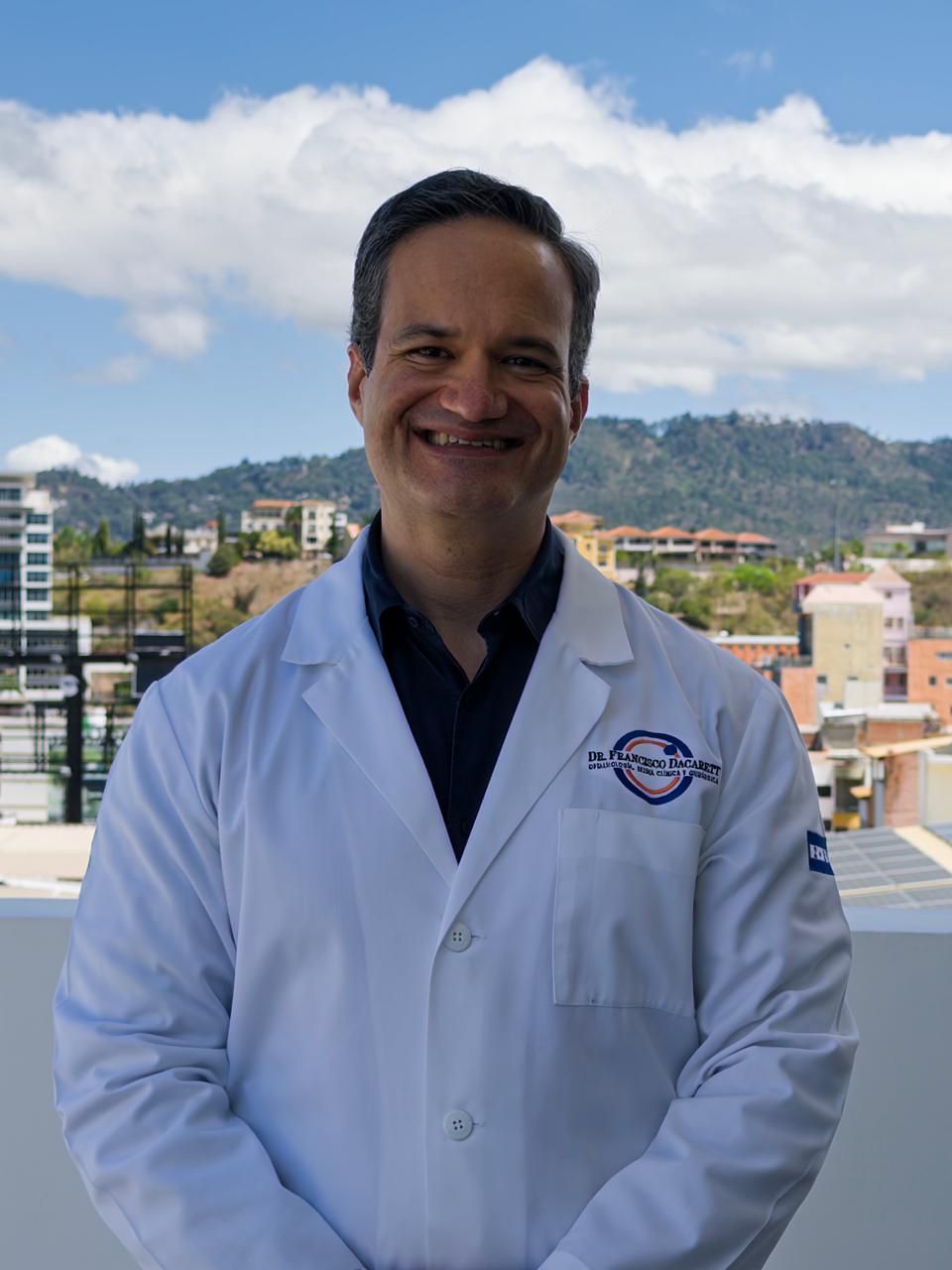
Reviewed by Francisco Santos Dacarett, retina specialist
01·What it is
What is retinoblastoma?
The retinaWhat it means: The layer at the back of the eye that captures light. It works like the film in a camera. is a very thin cloth at the back of the eye, an extension of the brain: it is the part that receives light and lets you see. Retinoblastoma is a malignant tumor that starts in the cells of the retina. It is a rare cancer, but it is the most common malignant eye tumor in children 3. It can affect one eye or both.
It is caused by a change in the RB1 geneWhat it means: A gene that normally keeps the growth of retinal cells in check. When it fails, those cells can grow out of control.. Sometimes the change appears for the first time in the child; other times it is inherited from one of the parents 3. That is why retinoblastoma cannot be prevented with diet or habits. What is in our hands is finding it while it is still inside the eye, before it threatens the child's sight or life.
02·The signs
Two signs you can see at home.
Early detection is in the hands of the family and the pediatrician. Pay close attention to these two:
Normal reflectionWhite reflection
01
A white reflection in the pupil (leukocoria)
It is the most common sign: 6 in 10 children reach diagnosis because of it 4. In a flash photo, a healthy pupil looks red. With leukocoria, one pupil looks white or yellowish, like a cat's eye shining in the dark. Sometimes it only shows in some photos or in certain light, and that does not make it less important.
Eyes alignedOne eye turned
02
An eye that turns (strabismus)
It is the second most common sign 3. I mean an eye that constantly turns inwards or outwards after 3 or 4 months of age. In the first weeks, an occasional turn can be normal. But any strabismus that appears suddenly, at any age, needs to be checked.
Check with a photo, in four steps
1
In a dimly lit room, take a photo of your child from the front, with the flash on, from one or two meters away. If your phone has "red-eye reduction", turn it off.
2
Look at both pupils in the photo. Both should look red, the same shade.
3
If one looks white, yellow or different from the other, keep the photo and message me. A single photo like that is already a reason to come in.
4
A normal photo does not replace a check-up: the pediatrician should examine the red reflex from birth and at every visit 5.
What to do today
A white reflection in the pupil is NOT something to wait on.
If you see either of the two signs, ask for an exam with an ophthalmologist or a retina specialist this week. The exam is done with dilated pupils (a fundus exam): it does not hurt, and it lets me see what is behind the pupil. Your mission today: if you have a photo with a white reflection, keep it and bring it to the appointment.
The World Health Organization includes retinoblastoma among the six childhood cancers it prioritizes in its Global Initiative for Childhood Cancer, together with acute lymphoblastic leukemia, Burkitt lymphoma, Hodgkin lymphoma, Wilms tumor and low-grade glioma 1. It chose them because they are cancers that can be cured when they are diagnosed and treated in time.
The difference is not whether treatment exists. In fact, children in countries with fewer resources reach diagnosis older and with more advanced disease 4. Every month gained in diagnosis shows in the outcome. That is what you can change.
How many children are alive three years after diagnosis, by country income 2
Worldwide study of 4,064 children in 149 countries. Lancet Global Health, 2022.
04·A campaign to share
A campaign that started with a family.
The De Olho nos Olhinhos campaign started in Brazil, created by journalists Tiago Leifert and Daiana Garbin after their daughter Lua was diagnosed with retinoblastoma. Its goal is to teach families and health professionals to look at children's eyes.
I collaborate with the campaign: Daiana and Tiago asked me to help translate their material into Spanish, and today we work together to share it in our region. It is free. Download it and share it: that information can save a child's sight and life.
Pediatric retina, with the pediatrician in the same conversation.
I am Francisco Santos Dacarett, an ophthalmologist practising clinical and surgical retina at Hospital y Clínica Santa Lucía in Tegucigalpa, Honduras. I trained in retina in Brazil. In my practice I see children with retinopathy of prematurity, tumors and uveitis.
If the diagnosis is retinoblastoma, we treat it here in Tegucigalpa, at the Fundación Santa Lucía, working together with the Fundación Hondureña para el Niño con Cáncer. Most treatments are done here; only for intravitreal chemotherapy do we refer the child to Guatemala.
Not with habits or diet, because it starts in a gene. What can be done is to find it early: look at the reflection of the eyes in photos, and have the pediatrician check it at every visit 3,5.
At what age does it appear?
Almost always before age five, and often before age two 3. In some children it is already present at birth.
Is a white reflection in a photo always cancer?
No. It can also come from a cataract, retinopathy of prematurity, Coats disease or other causes, and sometimes it is just the angle of the photo 7. Only the exam can tell. That is why you do not wait: you get it checked.
What is the exam like?
I put in drops to dilate the pupils and look at the retina with a light. It does not hurt. At a first check-up, if there is no suspicion of a tumor, sedation is almost never needed. In very small babies who will not stay still, or when there is a tumor, the exam is done under sedation, to see the whole retina, including areas that cannot be reached otherwise. If needed, it is completed with an ultrasound or an MRI.
Can it be cured?
Yes, when it is found inside the eye. Today there are treatments that aim to save the life, the eye and the sight: laser, cryotherapy, chemotherapy (through a vein, directly into the eye's artery, or inside the eye) and brachytherapy. In some cases the eye has to be removed to save the child's life 7. The plan depends on each child.
There has already been a case in my family. What should I do?
The siblings and children of a person with hereditary retinoblastoma need retina check-ups from birth and genetic counseling 3. Message me and I will tell you how to organize them.
If something worries you, message us today.
Send us a WhatsApp with your name and your child's age. We will answer and tell you when you can come in.
If your child already has the diagnosis, or if the eye is red, swollen or painful, message and call the hospital at the same time.
Sources
Where each figure comes from.
1
World Health Organization. CureAll framework: WHO Global Initiative for Childhood Cancer. 2021. www.who.int
2
Global Retinoblastoma Study Group. The Global Retinoblastoma Outcome Study: a prospective, cluster-based analysis of 4064 patients from 149 countries. Lancet Glob Health. 2022. DOI: 10.1016/S2214-109X(22)00250-9
Global Retinoblastoma Study Group. Global Retinoblastoma Presentation and Analysis by National Income Level. JAMA Oncol. 2020. DOI: 10.1001/jamaoncol.2019.6716
5
American Academy of Pediatrics et al. Red Reflex Examination in Neonates, Infants, and Children. Pediatrics. 2008. DOI: 10.1542/peds.2008-2624